Leaving Phoenix means leaving triple-digit heat behind, but what comes next depends on where you’re headed: rain in the Pacific Northwest, elevation in the mountains, snow in the Midwest, or humidity almost anywhere east of here.
After years of moving families out of the Valley as a long distance moving company, we’ve noticed the households who arrive feeling settled fastest are the ones who packed for the climate ahead, not just the move itself. That’s the idea behind a long distance moving kit: the essentials you keep with you, so you’re covered no matter what’s waiting when you get there.
Think of your long distance moving kit as the flip side of everything on the truck. We’ll handle your furniture, boxes, and belongings. Your long distance moving kit covers the rest, like clothing, medications, documents, and anything you’ll want within reach during the drive, the flight, the first night, and the days before your shipment arrives.
Start With Your Route, Not Just Your Destination
Phoenix summers are dry and predictable, which makes it easy to forget that conditions can shift dramatically within a single day of driving. Before you pack your long distance moving kit, look up the forecast for every leg of your trip, not just your final destination.
Climbing through higher elevations can drop temperatures by 20 degrees or more, and coastal or northern regions may bring rain, fog, or humidity that Phoenix simply doesn’t produce. Check road conditions and weather advisories a few days out, and again the morning you leave, so your kit reflects reality rather than guesswork.
Clothing That Should Travel With You
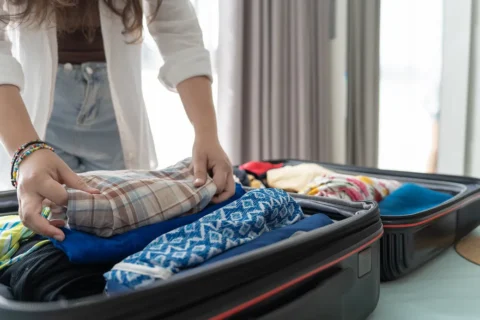
Our professional movers will carefully transport your wardrobe, but a long distance moving kit should be able to handle several climates at once, not just the one waiting at your final address. Break your clothing down by what you might actually drive or fly through:
For the Desert Stretch (Phoenix & Southwest Region)
- Breathable, lightweight layers for the first leg of the trip
- Sunglasses and sun protection for long stretches on the road
For Elevation Changes (Mountains & High Plains)
- A packable mid-layer, like a fleece or hoodie, for cooler air at altitude
- A light jacket for evenings, even if the days stay warm
If Your Route or Destination Forecast Calls for Rain or Humidity
- A waterproof jacket or poncho
- Quick-dry clothing that won’t stay damp in a humid climate
If Your Route or Destination Forecast Calls for Cold or Snow
- An insulated coat, gloves, and a hat
- Waterproof, closed-toe boots; sandals won’t help once temperatures drop
Whatever your route includes, pack one complete outfit per family member for the first 24–48 hours after arrival, since your shipment might arrive a day or two behind you.
Once you’ve set aside enough clothing to get your family through the trip and arrival, everything else in your wardrobe is safe to load. Seasonal clothing you won’t need right away, off-season coats or shorts, formal wear, and anything you won’t reach for during the trip or the first couple of days can all travel with your household shipment.

Helping Kids Adjust to a New Climate
Children notice climate shifts faster than adults, especially the jump from Phoenix’s dry heat to humidity or cold. Talk with kids ahead of time about what to expect, and let them help pick a few comfort items – like a favorite blanket, a jacket, or a toy – for their long distance moving kit.
Simple, matter-of-fact explanations (“it might be cold when we get there, so we’re bringing coats”) go a long way toward making the transition feel like an adventure rather than a surprise.
What Pet Owners Should Keep Accessible
Pets feel climate changes, too, and they can’t pack their own bags. Keep food, water, a leash, medications, and identification documents within reach throughout the trip. If you’re heading somewhere colder, a pet coat or paw protection can help during rest stops.
Add a few days’ worth of pet supplies to your long distance moving kit so your animal companions are covered even if delivery is delayed.
Health and Medication Items to Carry With You
Medications, prescriptions, and basic first-aid supplies belong in your bag, not on the truck. Keep a running list of medications with dosages, along with contact information for your current and future pharmacies, in case a refill is needed before your shipment arrives.
If anyone in your family has a condition affected by altitude, humidity, or cold, pack any doctor-recommended items in your long distance moving kit rather than relying on same-day errands in an unfamiliar city.
First-Night Essentials Before Delivery Day
However smoothly your move goes, there’s almost always a gap between your arrival and your household delivery. In addition to some extra clothing, there are a few other things you’ll certainly want during that inbetween time.
A well-stocked long distance moving kit should include a phone charger, toiletries, snacks, basic kitchen items, and any important documents, like leases, ID, insurance paperwork, and your mover’s contact information. This is also the right place for valuables like cash and high-end jewelry and irreplaceable items you’d rather keep with you personally.
Bekins Supports the Rest of Your Move
Once your long distance moving kit is packed and your family is ready to go, your move coordinator and crew take care of the household side of things: inventory documentation, careful loading, interstate transportation, and delivery-window communication so you know when to expect your shipment.
Your family carries what you need day to day, and your movers carry everything else.
Ready to start planning your move out of Phoenix? Get a free moving quote and let a Bekins Van Lines move coordinator help you build a timeline that works for your family, your route, and where you’re headed next.
Frequently Asked Questions
Check the forecast for each leg of the trip in advance, not just the final destination, and pack layers that can handle both desert heat and cooler or wetter conditions.
Keep leases, identification, insurance paperwork, medical records, and your moving company’s contact details with you rather than in the shipment.
Yes. Bring at least one warm layer and one rain-ready layer so you’re covered whether you land somewhere cold, wet, or mild.
Pack enough clothing, toiletries, and essentials for at least 48 hours so a short gap between arrival and delivery doesn’t disrupt your plans.